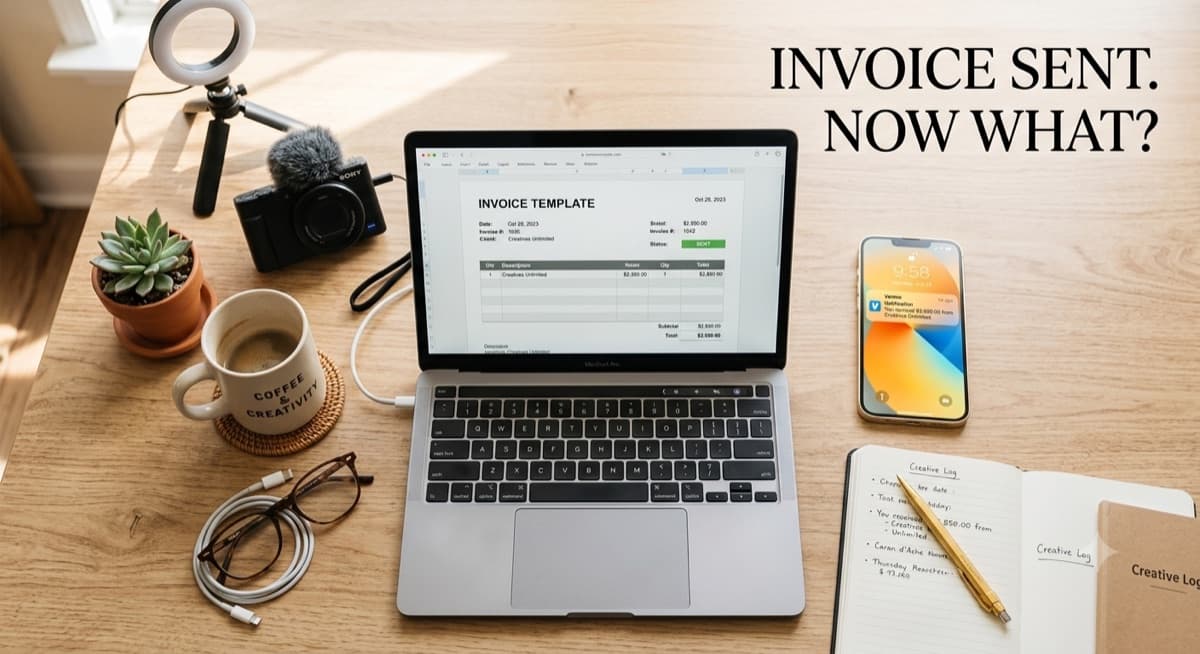
You delivered the content. The brand loved it. The post went live, comments are rolling in, and your campaign metrics look solid.
And then you wait.
Week two: nothing. Week three: still nothing. You send a polite follow-up email. Crickets. By week five, you're wondering whether chasing a brand for payment is part of the job description or a sign something went very wrong.
Here's the thing: late payments from brands are a systemic issue in creator-brand partnerships, and most of the time, it has nothing to do with the brand trying to stiff you. It's usually a paperwork problem. Missing invoice fields, invoices sent to the wrong contact, payment terms that weren't set upfront, or follow-ups that fall through the cracks.
The good news? Most of this is fixable on your end.
This guide breaks down exactly what your sponsorship invoice needs to include, when to send it, how to follow up professionally without burning bridges, and what terms like "Net-30" actually mean for a solo creator without an accounting department.
Why Creators Get Paid Late (And Why It's Usually Not Malicious)
Before we get into the invoice itself, it's worth understanding why payment delays happen in the first place.
Large brands and agencies don't pay invoices—their accounts payable departments do. That means when you email your campaign manager to say "hey, here's my invoice," there's a very good chance it lives in their inbox for three days before getting forwarded to someone else, who then needs to code it into a system, get it approved, and queue it for the next payment run.
If your invoice is missing a PO number they require, it gets kicked back. If it's addressed to the wrong entity, it gets bounced. If it arrives after their accounting cutoff, it waits until next cycle.
None of this is personal. But all of it delays your money.
The brands and agencies that pay on time usually do so because their creators make it easy—correct invoices, sent promptly, with all the right information already there. That's entirely in your control.
What to Include in a Sponsorship Invoice
A creator invoice is a legal payment request document. It doesn't need to be fancy, but it does need to be complete. Here's every field that should appear.
Your Business Information
At the top of the invoice, include your legal name or business name (whichever you invoiced the brand under in your contract), your address, your email address, and your phone number if you use one for business.
If you operate as an LLC or have a registered business, use that entity name here. It needs to match what the brand has on file, otherwise their AP team will flag it as a mismatch.
Your Invoice Number
Create a simple numbering system and stick to it. Something like INV-2024-001, INV-2024-002, and so on. Invoice numbers let you track what's outstanding, make it easy to reference a specific payment in a follow-up, and look professional.
Some creators skip this and just send an email with the amount. That's a mistake—it makes record-keeping harder on both sides.
Invoice Date
The date you're issuing the invoice. This also starts the payment term clock. If your contract says Net-30, that 30 days begins on the invoice date, so don't backdate or leave it blank.
Payment Due Date
Calculate your due date from the invoice date based on your agreed payment terms and include it explicitly. Don't make the brand do the math. Write "Payment Due: [specific date]." Crystal clear.
The Brand's Business Information
Address the invoice to the correct legal entity. This often isn't the brand name you know—it might be a parent company, an agency, or a specific division. Check your contract or ask your contact before you send it, because billing the wrong entity is one of the most common reasons invoices get delayed.
Include their business name, billing address, and if you have one, the accounts payable contact or email.
Purchase Order (PO) Number
This one is critical and often overlooked. Many brands, especially larger companies and those working through agencies, require a PO number to process any payment. The PO is a number generated on their end that authorizes the payment.
If you don't include it, the invoice may be rejected outright or just sit in limbo until someone figures it out.
Ask for the PO number before the campaign launches. If they say they don't use POs, note that in your records. If they say they'll send one, wait for it before sending your invoice.
Campaign or Project Description
Briefly describe what services you're invoicing for:
Sponsored Instagram Reel — [Brand Name] [Product Name] Campaign
Deliverable: 1 × 60-second sponsored YouTube integration
Campaign Period: [start date] – [end date]
This should match the deliverable language in your contract. Keep it concise but specific enough that no one has to guess what this payment covers.
Itemized Deliverables and Fees
Break down your fees by deliverable if you had multiple. For example:
| Deliverable | Fee |
|---|---|
| 1 x Sponsored Instagram Reel | $2,500 |
| 1 x Story Set (3 frames) | $750 |
| Usage Rights (6 months, paid social) | $500 |
| Total | $3,750 |
Itemizing does two things: it's transparent, which brands appreciate, and it makes it easier for AP to code the invoice to the right budget lines on their end.
Your Payment Details
This is where the money actually gets sent. Include every detail based on how you accept payment:
For bank transfer (ACH in the US): Bank name, account holder name (must match your business name exactly), routing number, account number, and account type.
For international wire transfer: SWIFT/BIC code, IBAN or account number, and bank address.
For PayPal or Venmo: Include your handle or the linked email address, and be aware that some brands don't pay via personal payment apps.
Note: Never put your full banking details in the body of an email. Attach the invoice as a PDF or use a secure invoicing tool. Sending bank info in plain-text emails is a common target for invoice fraud.
Payment Terms
State your payment terms clearly: Net-30, Net-15, or due on receipt. We'll cover what these actually mean in the next section.
Late Payment Policy (Optional but Useful)
If you include a late payment clause in your contracts, restate it on the invoice as a reminder: "Invoices unpaid after [due date] are subject to a 1.5%/month late fee." You may never enforce it, but it signals professionalism and gently incentivizes timely payment.
What Does Net-30 Actually Mean for Creators?
If you've done any brand deals, you've seen "Net-30" in a contract. It's standard, but it often catches newer creators off guard the first time they're still waiting for payment five weeks after they posted.
Net-30 means the brand has 30 calendar days from the invoice date to process payment. Not 30 days from when you send the content. Not from when the brand approved the post. From the invoice date.
Some brands use Net-45 or even Net-60, which is common with large CPG companies and agencies operating on quarterly budgets. If you see Net-60 in a contract and you're not in a financial position to float that long, negotiate. Many brands will agree to Net-30 if you ask—they often don't expect pushback.
A few practical things to know:
Net-30 starts when the invoice is received and accepted, not necessarily when you send it. If your invoice is missing a PO number and gets kicked back, the clock hasn't started.
Payment runs are often weekly or biweekly. Even if your Net-30 deadline is a Thursday, a brand might batch all payments on the 1st and 15th of the month. Your payment might arrive a few days after the technical due date—it's a processing cycle quirk, not bad faith.
Ask about payment terms before signing the contract. You have more leverage to negotiate up front than after the fact.
When Should You Send Your Invoice?
Timing is something a lot of creators get wrong. Some wait until the campaign is totally wrapped up. Others invoice too early before the brand has approved anything. The right timing depends on your contract, but here's the framework:
If your contract allows invoicing upon content delivery: Send the invoice the same day you deliver final content or go live, whichever comes first. Don't wait for the brand to ask.
If your contract requires brand approval first: Invoice within 24–48 hours of receiving written approval. Keep that email or Slack message—that's your paper trail.
If payment is partially upfront: Invoice for the first payment immediately after signing and before you do any work.
For longer-running or retainer deals: Invoice monthly. Set a recurring reminder on the first or last business day of each month so it becomes automatic.
The bottom line: send your invoice promptly. Delayed invoicing directly delays your payment. Brands can't pay what they haven't received.
How to Follow Up on an Unpaid Invoice Without Being Annoying
Following up on late invoices is uncomfortable. Nobody wants to feel like they're nagging a brand they want to work with again. But here's a reframe: you are a professional requesting payment for services already rendered. Following up is not annoying. It is appropriate.
Here's a three-step approach that stays firm without burning the relationship.
Step 1: Friendly reminder (7–10 days before due date)
If payment is approaching its due date with nothing received, send a brief, friendly check-in.
"Hi [name], just circling back on Invoice INV-2024-007 for $3,750, due [date]. Please let me know if you need anything on your end to process it. Happy to resend if helpful."
Step 2: Direct request (on or just after due date)
If the due date passes with no payment, be polite but direct. Attach the invoice again.
"Hi [name], Invoice INV-2024-007 for $3,750 was due on [date] and I haven't received payment yet. Could you confirm the status and let me know an expected payment date? I've attached the invoice again for reference."
Step 3: Escalation (two or more weeks past due)
Route around your campaign manager and reach AP directly. Signal consequences without making threats you're not prepared to follow through on.
"Hi [name], I'm following up again on Invoice INV-2024-007, now [X] days past due. Could you please connect me with your accounts payable contact so I can resolve this directly? I'd like to avoid any formal late payment procedures."
If escalation still doesn't work, options include a formal demand letter, using a collections service for creators (yes, those exist), or—if amounts are significant—small claims court. Most creator-brand disputes never get here, but knowing the options helps you speak with more authority in your follow-ups.
Sponsorship Invoice Checklist: Quick Reference
Before you hit send, run through this:
Before You Send: Invoice Checklist
Your information
- Legal name or business name (must match your contract)
- Address
- Email and phone number
Invoice details
- Unique invoice number (e.g. INV-2024-007)
- Invoice date
- Payment due date (calculated from your agreed terms)
Brand information
- Correct legal entity name
- Billing address
- Accounts payable contact or billing email
- PO number (ask before sending if you do not have one)
Deliverables
- Campaign or project name
- Itemized list of deliverables
- Fee per deliverable
- Total amount due
Payment
- Payment method and full banking details
- Payment terms stated clearly
- Late fee policy (if applicable)
Send it as a PDF. Name the file clearly: INV-2024-007_YourName_BrandName.pdf. This makes it easy for AP to file and find.
The Part No One Talks About: Tracking It All
The invoicing process itself is manageable once you have a template. The harder part is tracking the status of every invoice across every brand deal you've got running.
As your brand deal volume grows, it gets genuinely difficult to remember: Did I send that invoice? Did they acknowledge it? Is it technically overdue, or am I still within the Net-30 window? When did I last follow up?
Most creators use a spreadsheet for this, which works until it doesn't—until you're refreshing your bank account at 11pm trying to figure out which of three outstanding invoices just hit.
This is exactly the problem BrandTrack was built to solve. BrandTrack's payment tracking feature lets you log every deal, attach your invoice, set payment terms, and get automatic reminders when a payment is approaching its due date or goes past it. Instead of mentally managing which follow-ups you've sent, the system does it for you—so you can stay focused on creating content rather than running a one-person collections department.
If you're managing more than two or three brand deals at a time, having a system that tracks payment status isn't optional. It's how you protect your income.
Final Thoughts
Getting paid on time as a creator isn't about luck or having the right relationships—it's about having a process. A complete invoice, sent promptly, to the right contact, with clear payment terms, dramatically improves your chances of getting paid without having to chase.
Set up your invoice template once. Use the checklist every time. Follow up proactively. And track everything in a system that won't let things fall through the cracks.
You did the work. Getting paid for it shouldn't be the hardest part.
Stop tracking brand payments in a spreadsheet.
BrandTrack automatically monitors your invoice status, sends follow-up reminders, and keeps every deal organized in one place.